
Blog
The Ultimate Road Trip: Grand Teton & Yellowstone National Parks
There are road trips, and then there are life-changing road trips. This guide covers everything: when to go, where to stop, what you can’t miss, and why making Jackson Hole your basecamp makes the whole trip better.
There are road trips, and then there are life-changing road trips. This guide covers everything: when to go, where to stop, what you can’t miss, and why making Jackson Hole your basecamp makes the whole trip better.
When to Go: Choosing Your Season
Wyoming’s seasons swing dramatically, and your experience of both parks depends heavily on timing. Here’s a quick breakdown:
- May–June: Wildflowers, waterfalls at peak flow, fewer crowds
- July–August: Peak season—all roads open, warmest temperatures, adventures, galore.
- September: Fall colors, elk rut, thinning crowds—arguably the best month
- October: Dramatic skies, early snow possible, magical golden light
- Winter: Some roads close; snowshoeing and Nordic skiing alternatives available
- Best overall window: Late May through mid-October
Pro tip: Book Wyoming Inn early—summer weekends sell out months in advance. Arriving Sunday through Thursday often unlocks better availability and pricing.
Grand Teton National Park: Essential Stops
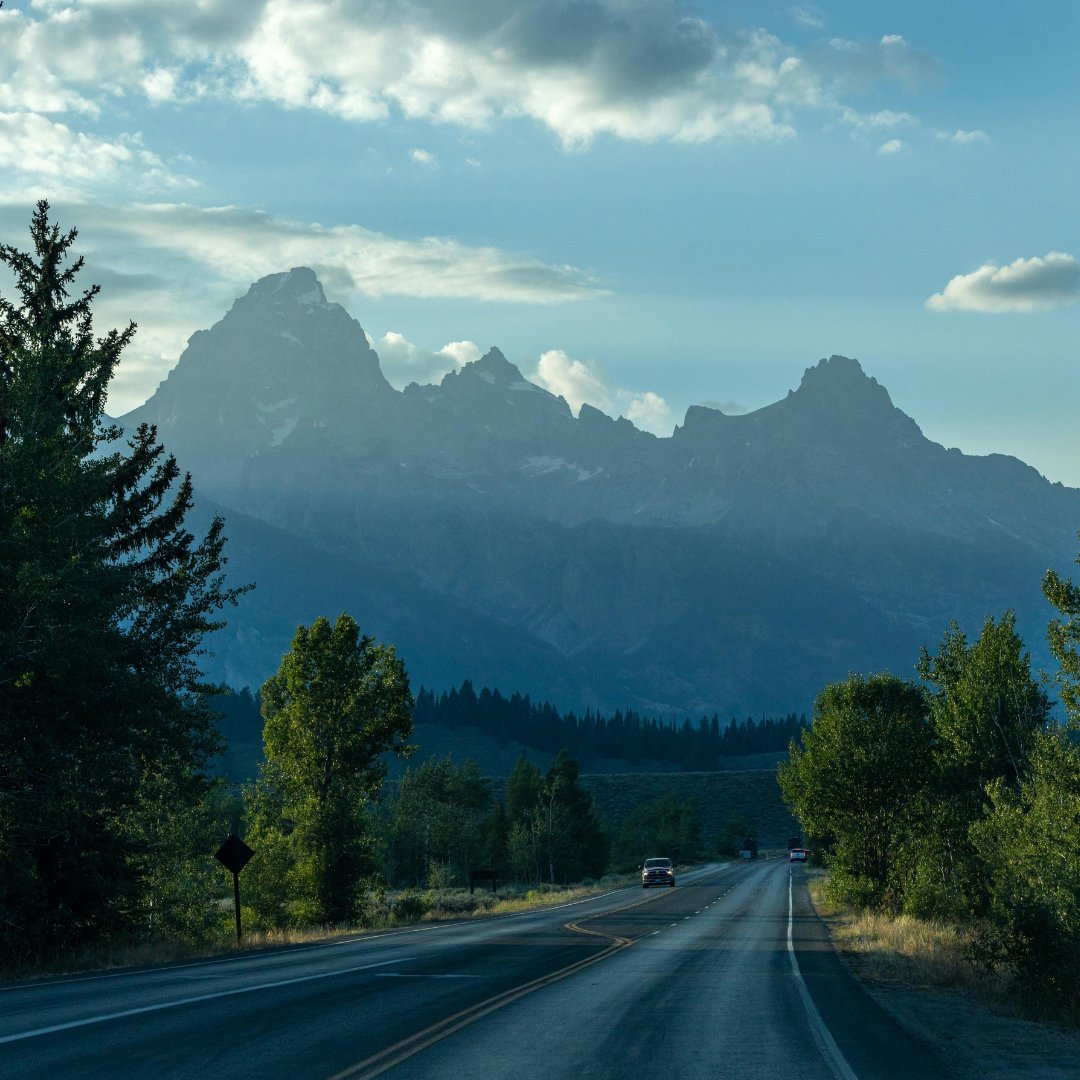
Your road trip officially begins the moment you pass through the Moose Entrance Station and the Tetons materialize in front of you—an abrupt, theatrical wall of cathedral peaks that have startled visitors since the first explorers stumbled into this valley.
Oxbow Bend
One of the most photographed spots in Wyoming, Oxbow Bend is a slow curve of the Snake River with Mount Moran’s reflection shimmering in the water on calm mornings. Arrive before sunrise for the full effect. Wildlife sightings here are near-guaranteed: moose, trumpeter swans, osprey, and bald eagles are regular visitors.
Snake River Overlook
This is where Ansel Adams made his most famous photograph of the Tetons in 1942. Pull over, walk to the overlook rail, and understand immediately why he stopped. The panorama of the entire Teton Range above the sweeping S-curve of the Snake River is genuinely humbling. Early morning or golden hour are unbeatable here.
Jenny Lake
The crown jewel of Grand Teton’s front range, Jenny Lake sits at the base of the most dramatic section of the Teton peaks. Take the scenic loop drive, hop the ferry across to the Hidden Falls and Inspiration Point trailhead, or simply walk the shoreline path. The views from Inspiration Point rank among the best in the American West.
Signal Mountain Summit Road
Don’t miss the Signal Mountain Summit Road, a five-mile paved spur that delivers you to two separate overlooks sitting above the valley floor. From the top, you get a rare reverse perspective: instead of looking up at the Tetons, you look out across the entire Jackson Hole valley with the peaks as a backdrop.
Laurance S. Rockefeller Preserve
At the quieter southern end of the park, the LSR Preserve offers eight miles of trail through meadows, ponds, and forest. The visitor center is a work of meditative architecture worth experiencing. This area tends to be less crowded than the main park corridor—a welcome exhale after Jenny Lake.
The Drive North: Jackson Hole to Yellowstone
From Jackson, follow US-89 / US-191 north through the park, pulling over at viewpoints along the way. The road traces the base of the range, offering a parade of iconic peaks: the Grand Teton (13,775 ft), Mount Owen, Teewinot, and the Cathedral Group.
Where Grand Teton ends, the John D. Rockefeller Jr. Memorial Parkway begins—a connecting corridor of federal land that feels like a gentle transition between two entirely different worlds. The terrain softens, the spruce and fir forest thickens, and you’re at Yellowstone’s South Entrance in about an hour from Jackson.
Total drive time, Jackson to Yellowstone South Entrance: Approximately 60–75 minutes without stops (plan for more—you’ll stop).
Yellowstone National Park: What You Can’t Miss
The oldest national park in the U.S. and the largest active volcanic system in North America, Yellowstone operates by its own geological rules. Geysers erupt on schedules set by underground plumbing, hot springs glow in colors produced by heat-loving microorganisms, and bison wander across roads with complete indifference to your itinerary.
Old Faithful & the Upper Geyser Basin
Old Faithful erupts roughly every 90 minutes, shooting hot water up to 185 feet into the Wyoming sky. But don’t stop there. The Upper Geyser Basin boardwalk contains the highest concentration of geysers on Earth. Morning Star, Beehive, Grand Geyser—each with its own personality and schedule. Allow at least two hours here.
Grand Prismatic Spring
The images you’ve seen don’t do justice to the real thing. Grand Prismatic Spring is 370 feet across and blazes with rings of orange, yellow, green, and deep blue—colors created by thermophilic bacteria living at different temperature gradients from the boiling center outward. Walk the boardwalk, then hike the Fairy Falls trail for the aerial view.
Lamar Valley: America’s Serengeti
If wildlife is your priority, Lamar Valley in Yellowstone’s northeast corner earns its nickname. Wolf packs, grizzly bears, vast bison herds, pronghorn, elk, and coyotes all move through this wide-open grassland valley. Bring binoculars. Get there at dawn or dusk. This is some of the best wildlife viewing in the continental United States.
Grand Canyon of the Yellowstone
The Yellowstone River has carved a canyon 800–1,200 feet deep through vivid yellow and orange rhyolite rock, and the Lower Falls—twice the height of Niagara Falls—plunge into it with thunderous drama. Artist Point on the South Rim is the classic viewpoint. Uncle Tom’s Trail descends 600 feet via stairs and steel platforms to the base of the falls.
Insider Tips for the Road
- Buy your park passes in advance. Both Grand Teton and Yellowstone are covered by the America the Beautiful Annual Pass ($80), which pays for itself on a trip like this. Purchase online before you arrive.
- Plan for early mornings. Wildlife is most active at dawn and dusk. Crowds at popular overlooks peak mid-morning. Arriving at Oxbow Bend or Jenny Lake just after sunrise is a completely different experience from arriving at 10 a.m.
- Cell service is limited inside the parks. Download offline maps (Gaia GPS or Google Maps offline) before you enter. Wyoming Inn’s Wi-Fi is your last reliable connection before you head deep into the parks.
- Pack for all conditions, every day. Wyoming weather can shift from 75°F sunshine to freezing rain within hours, even in summer. Layers, a quality waterproof jacket, and sturdy footwear are non-negotiable.
- Book dining reservations ahead. In-park lodges and popular Jackson restaurants fill up in peak season. Lock in dinner reservations before your trip, not the day-of.
Why Jackson Hole Is the Perfect Road Trip Basecamp
Sitting at 6,237 feet elevation in a valley flanked by two mountain ranges, Jackson Hole is one of America’s most storied outdoor destinations. It’s not just the gateway to Grand Teton National Park—it’s a thriving town with world-class dining, art galleries, Western culture, and a friendly, unhurried pace that makes you want to linger.
More practically: Jackson is positioned almost perfectly for a two-park adventure. Grand Teton National Park’s southern entrance is just minutes north of town. From there, the Rockefeller Parkway connects seamlessly to Yellowstone’s South Entrance—no backtracking, no wasted mileage.
Where to Stay in Jackson Hole: Wyoming Inn
Nestled in the heart of Jackson Hole, Wyoming Inn captures the warmth and character of the Mountain West without sacrificing modern comfort. It’s the kind of place that feels genuinely Wyomingite—not a sterile chain hotel, but a property with soul, where the staff know the best hidden trails and can tell you exactly where the elk were spotted that morning.
Ideally situated for both early-morning park entry and after-adventure dining in downtown Jackson, Wyoming Inn puts you within easy reach of everything this corner of Wyoming has to offer.
Wyoming Inn Highlights:
- Minutes from Grand Teton National Park’s southern entrance
- Free on-site parking for easy gear loading
- Knowledgeable local staff with real trail and wildlife tips
- Perfect launch point for both parks in a single trip
- On-site restaurant (Whistling Grizzly), spa, gym, and more to comfortably start or end your National Park adventures.
Frequently Asked Questions
What is the best home base for a Grand Teton and Yellowstone road trip?
Jackson Hole is the ideal home base. Wyoming Inn sits in the heart of Jackson, putting you minutes from Grand Teton’s southern entrance and about an hour from Yellowstone’s South Entrance. It’s also central for dining, gear shops, and Jackson’s Western character.
How many days do you need for this road trip?
A minimum of 5 days gives you a meaningful experience of both parks. 7–8 days is the sweet spot if you want to hike, slow down, and truly absorb the landscape.
What is the best time of year to visit?
Late May through October is the prime window. September is often considered the best month: fall foliage, the elk rut, thinning crowds, and spectacular light.
Is Wyoming Inn close to Grand Teton National Park?
Yes. Wyoming Inn is just a short drive from Grand Teton’s South Entrance. You can easily be inside the park within 10–15 minutes of leaving the hotel.
Can you visit both parks in one trip?
Absolutely—and it’s the classic Wyoming road trip for good reason. The two parks are connected by the John D. Rockefeller Jr. Memorial Parkway, making it a natural and seamless journey from Wyoming Inn.
Pack the Car. The Tetons Are Waiting.
A road trip through Grand Teton and Yellowstone isn’t just a vacation—it’s a recalibration. You return with sore legs, a camera roll you’ll spend months sorting through, and an understanding of why people fall in love with Wyoming.
READY TO PLAN YOUR TRIP?
Book Wyoming Inn in Jackson Hole
Centrally located in Jackson Hole, minutes from Grand Teton National Park. Check availability for your dates and secure your spot in one of Wyoming’s most beloved destinations.